“All the practice exams really helped and I was able to pass first try! Thanks again :)”
GGabrielPassed · sent in the app
ATI TEASWhat helped you pass?
“I got a 91.3 after taking the practice exams many times. Thank you.”
KKarenPassed · sent in the app
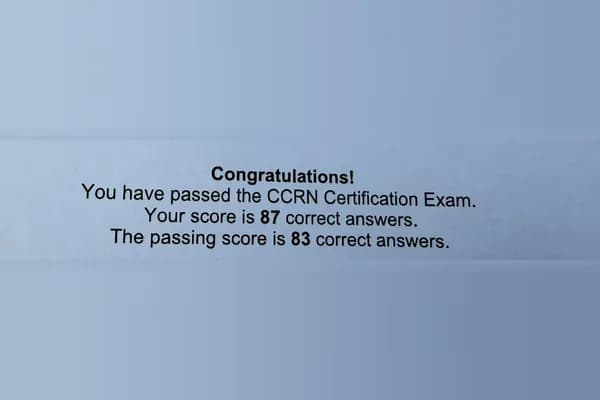
AACN CCRN® (Adult)What helped you pass?
“The questions were very helpful”
✓AACN CCRN® (Adult) studentPassed · sent in the app
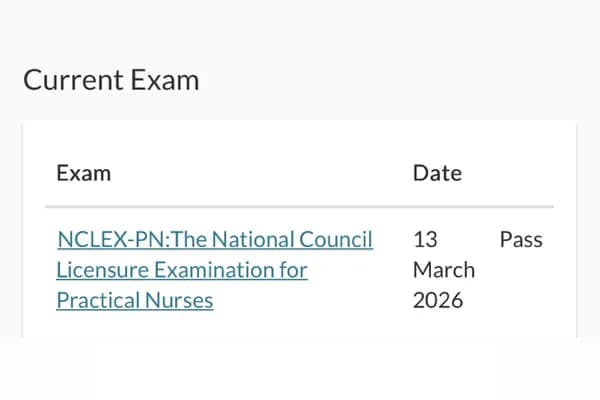
NCLEX-PNWhat helped you pass?
“Doing practice questions daily”
✓NCLEX-PN studentPassed · sent in the app
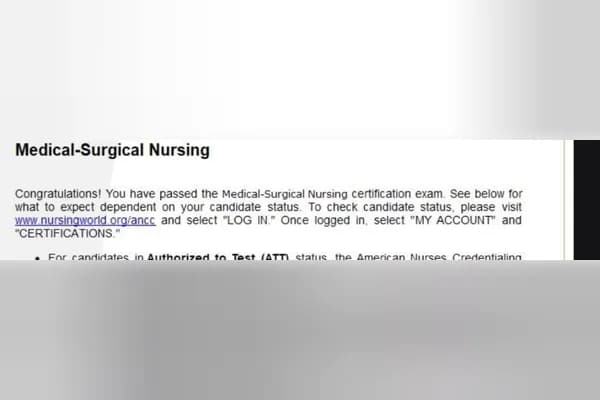
Medical-Surgical NursingWhat helped you pass?
“Your practice questions”
✓Medical-Surgical Nursing studentPassed · sent in the app
Emergency NursingWhat helped you pass?
“The practice questions trained me to analyze the questions in the actual exam better.”
MBMary B.Passed · sent in the app
NCLEX-RNWhat helped you pass?
“Practice.”
✓NCLEX-RN studentPassed · sent in the app
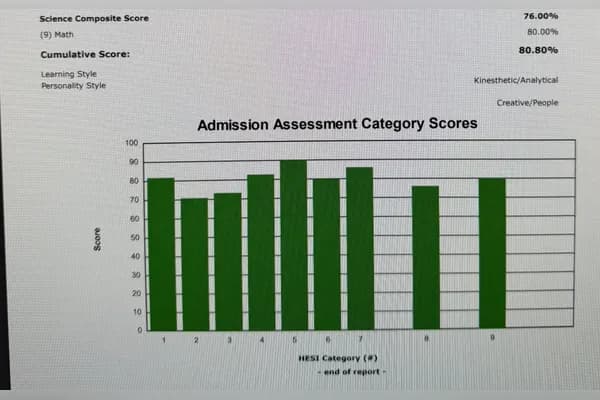
HESI A2What helped you pass?
“All the practice exams really helped and I was able to pass first try! Thanks again :)”
GGabrielPassed · sent in the app
ATI TEASWhat helped you pass?
“I got a 91.3 after taking the practice exams many times. Thank you.”
KKarenPassed · sent in the app
AACN CCRN® (Adult)What helped you pass?
“The questions were very helpful”
✓AACN CCRN® (Adult) studentPassed · sent in the app
NCLEX-PNWhat helped you pass?
“Doing practice questions daily”
✓NCLEX-PN studentPassed · sent in the app
Medical-Surgical NursingWhat helped you pass?
“Your practice questions”
✓Medical-Surgical Nursing studentPassed · sent in the app
Emergency NursingWhat helped you pass?
“The practice questions trained me to analyze the questions in the actual exam better.”
MBMary B.Passed · sent in the app
NCLEX-RNWhat helped you pass?
“Practice.”
✓NCLEX-RN studentPassed · sent in the app
ATI TEAS
“…I didn't study rigorously and still managed to get an 86 on my TEAS today. …”
MAMaile AllenGoogle Play review86 on the TEAS
NCLEX-RNWhat helped you pass?
“This app, the practice questions are the best way to study for the exam”
CCarolynPassed · told us in the app
CNA
“…My daughter says this app saved her career! …”
BHBecki HendricksonGoogle Play reviewPassed
HESI A2What helped you pass?
“The practice questions were similar to the actual exam.”
CCourtneyPassed · told us in the app
HESI A2
“…I'm a single parent with 2 toddlers so it is not easy to study. I was able to pass my Hesi today with a 77% score.”
LSL. Smith-NomelGoogle Play reviewPassed with a 77%
ATI TEASWhat helped you pass?
“The practice exams on specific challenging subjects helped the most. I would set the 50 question exam on one topic at a time so I'd get the most practice on stuff that I needed help on the most.”
BBlancaPassed · told us in the app
AACN CCRN® (Adult)What helped you pass?
“I enjoyed the review questions and ability to simulate exams.”
SSarahPassed · told us in the app
NCLEX-PNWhat helped you pass?
“Doing tests and hours per day of studying, i did the grunt work, no way around it.”
FFrancisPassed · told us in the app
Compare the plansPick your AACN CCRN® (Pediatric) plan
Review our AACN CCRN® (Pediatric) preparation plans side by side and choose the plan that best fits your study needs and timeline.One payment. Nothing auto-renews. Full access to all 465 questions.
The child was admitted to the pediatric intensive care unit after a major infection and is now progressively ill-appearing. Vital signs: temperature 39.2°C, heart rate 165/min, respiratory rate 40/min, blood pressure 78/42 mm Hg. Oxygen saturation is 95% on high-flow oxygen. The child is sleepy but arousable, has cool extremities, weak peripheral pulses, capillary refill of 5 seconds, and decreased urine output. A 6-year-old child with suspected septic shock is receiving high-flow oxygen, has a patent airway, and IV/IO access has been established. Which intervention is the most appropriate first hemodynamic step to stabilize perfusion?
Incorrect
A.Administer a bolus of intravenous isotonic fluids
B.Perform endotracheal intubation
C.Initiate vasopressor support immediately
D.Start broad-spectrum antibiotic therapy
A child with cyanotic congenital heart disease is recovering after placement of a modified Blalock–Taussig shunt. What is the primary purpose of this procedure?
Correct
A.To route systemic venous blood from the superior vena cava directly into the left atrium
B.To create an atrial communication to increase mixing of oxygenated and deoxygenated blood
C.To connect the superior vena cava to the pulmonary artery as a cavopulmonary shunt
D.To provide a systemic-to-pulmonary artery connection that increases pulmonary blood flow and improves oxygenation
Category QuizIA. Cardiovascular1 of 3 correct04:12
Answers ResultALL 3CORRECT 1INCORRECT 2SAVED 0
The child was admitted to the pediatric intensive care unit after a major infection and is now progressively ill-appearing. Vital signs: temperature 39.2°C, heart rate 165/min, respiratory rate 40/min, blood pressure 78/42 mm Hg. Oxygen saturation is 95% on high-flow oxygen. The child is sleepy but arousable, has cool extremities, weak peripheral pulses, capillary refill of 5 seconds, and decreased urine output. A 6-year-old child with suspected septic shock is receiving high-flow oxygen, has a patent airway, and IV/IO access has been established. Which intervention is the most appropriate first hemodynamic step to stabilize perfusion?
Incorrect
A.Administer a bolus of intravenous isotonic fluids
B.Perform endotracheal intubation
C.Initiate vasopressor support immediately
D.Start broad-spectrum antibiotic therapy
Hide Explanation
This presentation is consistent with septic shock with poor perfusion (hypotension, delayed capillary refill, weak pulses, oliguria). After ensuring airway patency and providing oxygen, the first hemodynamic intervention is rapid isotonic fluid resuscitation (commonly 10–20 mL/kg boluses with frequent reassessment) to improve preload and cardiac output and restore tissue perfusion. The choice mentioning “start broad-spectrum antibiotic therapy” is essential in sepsis and should be given early (ideally within the first hour), but it does not provide the most immediate stabilization of shock physiology when perfusion is critically compromised. The choice mentioning “initiate vasopressor support immediately” is typically indicated when shock persists despite adequate fluid resuscitation or if fluids must be limited; it is not the initial hemodynamic step when fluid responsiveness has not yet been assessed. The choice mentioning “perform endotracheal intubation” can be necessary for respiratory failure or to reduce work of breathing, but in this scenario oxygenation is acceptable on supportive oxygen and the question specifies airway/oxygenation support is already in place, making fluid resuscitation the priority hemodynamic action.
AACN CCRN® (Pediatric) questions test how you apply knowledge in real situations. After every answer, you are provided with a clear rationale so you can understand the reasoning, learn from mistakes, and recognize it when it appears again.
Question 1 of 3
×0
The child was admitted to the pediatric intensive care unit after a major infection and is now progressively ill-appearing. Vital signs: temperature 39.2°C, heart rate 165/min, respiratory rate 40/min, blood pressure 78/42 mm Hg. Oxygen saturation is 95% on high-flow oxygen. The child is sleepy but arousable, has cool extremities, weak peripheral pulses, capillary refill of 5 seconds, and decreased urine output.
A 6-year-old child with suspected septic shock is receiving high-flow oxygen, has a patent airway, and IV/IO access has been established. Which intervention is the most appropriate first hemodynamic step to stabilize perfusion?
PiaStudy tutor
Why was "encourage oral fluids" wrong for the heart failure patient?
4:02 PM
Pia
In acute heart failure the lungs are already holding fluid, so extra fluids add to the load. Sit the patient upright, give oxygen, and expect a loop diuretic.
Practice questionCorrect
Which position eases breathing in pulmonary edema?
ASupineBHigh Fowler'sCTrendelenburg
Stuck on a question? Ask Pia.
Pia is the AI study tutor built into Prepia. Ask about the question in front of you and get the reasoning in plain words, with a diagram when a picture helps.
Explains what you missed
Tap Ask Pia under an explanation to go through why the right answer is right and where yours went wrong.
Draws it out
Lab ranges, processes and body systems become whiteboard diagrams you can replay.
Checks that it stuck
Ask Pia to quiz you and a practice question arrives in the chat, marked as soon as you answer.
Study anywhere, on any device
Pick up on the web
Same questions, same progress. Log in on any browser and keep going where you left off.
app.prepia.com
AACN CCRN® (Pediatric)IA. Cardiovascular
7 DaysP
Resume Your Learning:IA. CardiovascularResume Quiz
Question of the DayWhich action should the nurse take first when a client develops sudden shortness of breath?Answer now
Daily Quiz
10 Questions
20 Questions
Saved Questions
Missed Questions
Custom Quiz
Subjects
View All
IA. Cardiovascular28 of 83 Questions
IB. Respiratory22 of 80 Questions
IC. Endocrine, Hematology, Gastrointestinal, Renal, Integumentary49 of 117 Questions
ID. Musculoskeletal, Neurology, Psychosocial13 of 70 Questions
IE. Multisystem20 of 68 Questions
II. Professional Caring & Ethical Practice10 of 47 Questions
Take it in your pocket
Phone app, same account: five-minute sessions on the bus, in line, between classes.
9:41
P
Question of the DayAnswer now
Practice Progress28%
Daily Quiz
Subjects
IA. Cardiovascular28/83
IB. Respiratory22/80
Your Quizzes
10 Quick Questions10 random questions
20 QuestionsA longer mixed set
Missed QuestionsRetry what you got wrong
Every answer shapes what you study next.
Practice
Answer exam-specific questions.
Understand
Learn why each answer is correct.
Focus
Turn misses into your next session.
Improve
Repeat with purpose.
Before you start, you probably want to know…
The questions students ask us before they start, answered without the fine print.
Prepia is designed to help you practice the topics, decisions, and pacing required for your exam. Every question includes an explanation so you can review the reasoning behind the answer, not just memorize it. Question banks are updated as exam content changes.


 HESI A2What helped you pass?
 ATI TEASWhat helped you pass?
 AACN CCRN® (Adult)What helped you pass?
 NCLEX-PNWhat helped you pass?
 Medical-Surgical NursingWhat helped you pass?
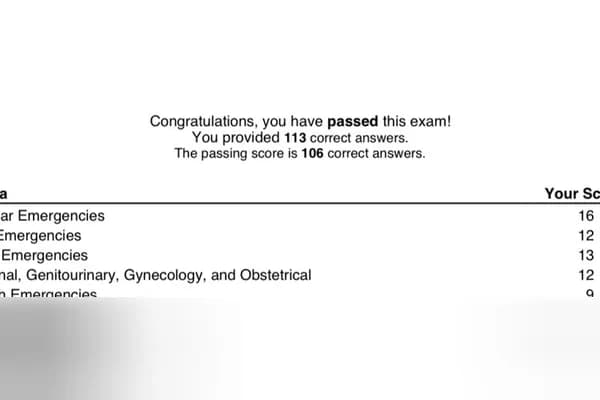 Emergency NursingWhat helped you pass?
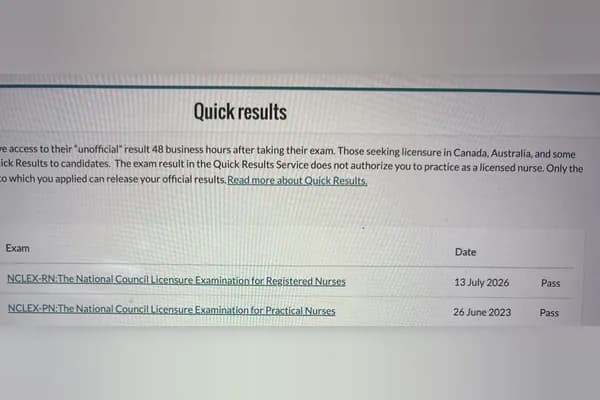 NCLEX-RNWhat helped you pass?

 7 Days


